



Swimming is not just a skill or a leisure activity; it's a comprehensive form of…
Nutrition Supplements for Elite Swimmers: What the Latest Research Means for Coaches and Athletes
October 6, 2026Swimming Habits
Find out how a personalized strategy in sports nutrition, using items such as iron and vitamin D3 as well as advanced electrolyte supplements, can help swimmers with their health, recovery, and performance.
Elite swimming relies on small, incremental improvements. Coaches work on refining stroke techniques as well as the starting and turning movements, at the same time running tough pool and dryland training programs. However, even an athlete with good technique can have problems with fatigue, recovery or inconsistent training. Diet might be one of the factors contributing to this.
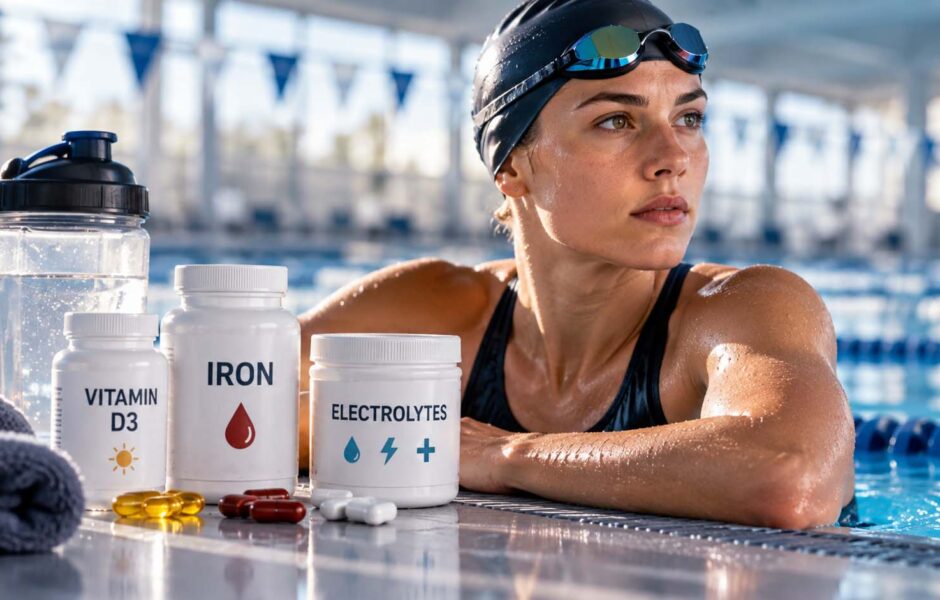
Recent studies concerning iron, vitamin D3 and electrolytes show an important principle, namely that people should be supplemented according to their individual requirements rather than being given a single, universal formula.
The use of iron supplements is an important point to consider for female swimmers.
Iron plays a role in the transport of oxygen by hemoglobin and in the generation of cellular energy. It is especially important that there is sufficient iron available for swimmers who undergo intensive aerobic training.
What the research reveals
The systematic review carried out in 2024 by Pengelly and his colleagues, as summarized in the provided FitChef article, looked at 23 studies that included 669 female athletes from 16 different sports. In the four comparative studies, athletes who were iron sufficient finished the endurance tests 1% to 19% quicker than those who were iron deficient. In a few of the studies that used higher doses, an improvement of about 20% in time to exhaustion was reported. These results cover a range of sports and therefore cannot be seen as indicating expected improvements in swimming race times.
The review also found that in 10 out of the 13 studies the iron stores had not completely recovered even though supplementation was provided. Since the methods of the studies and the groups of participants were different, these figures do not prove that there is a general treatment response.
Why ferritin matters
Hemoglobin is responsible for carrying oxygen in the blood, while ferritin is used to evaluate the amount of iron stored. It is possible for iron stores to be depleted even when hemoglobin levels are normal, a state known as non-anemic iron deficiency. In such cases, ongoing fatigue or trouble maintaining normal workloads may be sufficient reason to refer a person to a qualified healthcare professional, though these symptoms are not diagnostic.
What about dosage?
The article provided on FitChef refers to studies showing that a daily intake of 100 mg of elemental iron was linked to better endurance in iron-deficient female athletes. However, this does not represent a universal minimum effective dose and cannot be considered a suitable dosage for all swimmers. Too much iron can be harmful, and so supplementation should only be carried out after an individual clinical assessment has been performed.
For the coaching application, it is necessary to identify the relevant symptoms and risk factors, promote suitable testing, and work in coordination with specialists in sports medicine and nutrition rather than giving iron supplements.
A study of vitamin D3 specifically looks at competitive swimmers
Vitamin D is important for the regulation of calcium, for bone health and for normal muscle function; since indoor swimmers have limited exposure to sunlight, their vitamin D levels should be discussed with their healthcare team.
The 2026 swimming-specific review
In April 2026, Liu and his colleagues issued a systematic review in the journal Physiologia, which covered six randomized, placebo-controlled trials with a total of 246 competitive swimmers and divers. The trials looked at a dosage of 2,000 to 5,000 IU per day for periods ranging from 12 weeks to six months and found that the supplementation always led to higher levels of vitamin D in the blood, with average increases of as much as 9.3 ng/mL.
Although some of the higher-dose interventions led to an improvement in muscle strength or lean mass, the review identified no consistent advantages regarding swimming performance, immune function or bone turnover. The doses mentioned in the study refer to the research protocols and not to instructions for unsupervised use.
When it comes to coaching, it is worthwhile to carry out an individual assessment of vitamin D levels where this is appropriate from a clinical point of view, especially for athletes who spend a lot of time indoors. Although addressing a deficiency can have benefits for health, it should not be promoted as a certain method of improving race times.
Electrolyte Supplements: The Importance of Hydration Even When in the Pool
Even when they are in the water swimmers lose fluid and electrolytes through sweating. Sodium, potassium and magnesium are involved in maintaining fluid balance, nerve signaling and normal muscle function. The amount of fluid one needs to take depends on the duration of the session, the intensity, the conditions of the pool and the individual’s sweat losses.
What change is taking place in electrolyte products?
An article written in November 2025 by The Absorption Company looked at eight products and identified three market trends: formulas that are high in sodium, drinks which combine electrolytes with carbohydrates, and products promoted based on advanced absorption technologies. Since the comparison was carried out by a supplement manufacturer that has its own product, the ratings and the absorption claims presented in it do not constitute independent clinical evidence.
| Product | Reported sodium / serving | Notable formulation |
| LMNT | 1,000 mg | Zero sugar |
| Liquid I.V. | 500 mg | Potassium and added vitamins |
| Skratch Labs Sport Hydration | 400 mg | Includes carbohydrates |
| Nuun Sport | 300 mg | Effervescent tablet |
| DripDrop ORS | 330 mg | Oral rehydration formulation |
For the coaching aspect, work with a sports dietitian to adjust your drinking intervals, replace sodium and manage your carbohydrate consumption. It is important to avoid both drinking too little and drinking too much, as both can dangerously reduce blood sodium levels.
Taking Nutrition Research and Turning it into Coaching Decisions
- Iron: refer athletes with relevant symptoms or risk factors for appropriate assessment.
- Vitamin D: discuss testing when warranted, especially for indoor swimmers.
- Hydration: individualize fluid, electrolyte and fueling plans.
- Recovery: monitor fatigue, perceived exertion and tolerance of familiar workloads.
- Supplement safety: seek qualified guidance and independently tested products; no supplement is entirely free of contamination risk.
Nutrition supports the athlete, but technical development remains central. Stroke mechanics, body alignment, breathing coordination and maintaining technique under fatigue all require deliberate practice.
Combine smart nutrition with immediate stroke feedback.
Nutrition is important for athletes. SwimMirror enables coaches and swimmers to concentrate on technique. With the underwater training mirror, swimmers are given immediate visual feedback so that they can see their movements as they are practicing, without having to carry out a complicated installation or use any additional attachments.
- SwimMirror HD offers a clearer, high-definition reflection without the aluminum grain of the original model.
- The HD model is 25% lighter than the original SwimMirror.
- Its corrosion-resistant construction is designed for aquatic training, with rinse-and-air-dry maintenance.
- SwimMirror has received an endorsement from three-time Olympic gold medalist Rowdy Gaines.
Whether working on body position, stroke alignment or technical consistency, coaches can use SwimMirror to incorporate visual feedback directly into training.
Key Takeaways for Elite Swim Coaches
- Iron deficiency can affect endurance even when hemoglobin is normal; assessment and treatment should be individualized.
- The 2026 aquatic-athlete review found improved vitamin D status but no consistent improvement in swimming performance.
- Electrolyte and fluid needs vary; more sodium is not automatically better.
- Use professional guidance and independently tested supplements to reduce contamination risk.
- Nutrition and real-time technique feedback address different aspects of swimmer development.
Frequently Asked Questions
What supplements should elite swimmers consider?
There is no universal program. Iron, vitamin D3 and electrolytes may be relevant depending on nutritional status, training demands and individual needs.
Do female swimmers need iron supplements?
Not necessarily. A healthcare professional can assess iron status, including hemoglobin and ferritin when appropriate. Unnecessary iron can be harmful.
Can vitamin D3 make swimmers faster?
The 2026 review found improved vitamin D status but no consistent improvement in swimming performance. Correcting deficiency is primarily a health measure.
Do swimmers need electrolyte supplements if they train in water?
Swimmers still sweat, but not every workout requires a supplement. Hydration should reflect session demands and individual losses.
Are higher supplement doses more effective?
Not automatically. Appropriate doses depend on the nutrient, clinical status and athlete; high doses can cause adverse effects.
How can coaches identify possible nutritional problems?
Monitor fatigue, recovery and changes in training tolerance, then refer athletes for professional evaluation rather than diagnosing deficiencies.
How can SwimMirror complement elite training?
It lets swimmers observe stroke mechanics during practice. SwimMirror HD adds a clearer reflection and a 25% lighter design.
Final Thoughts
Top performance in swimming relies on physical conditioning, technique, recovery and nutrition. The research mentioned in this article advocates for individualized nutritional evaluation and working with qualified professionals. Combine well-informed nutritional habits with purposeful technical training and immediate visual feedback.
Provide your swimmers with proper nutrition advice and assist them in improving their technique using SwimMirror.